


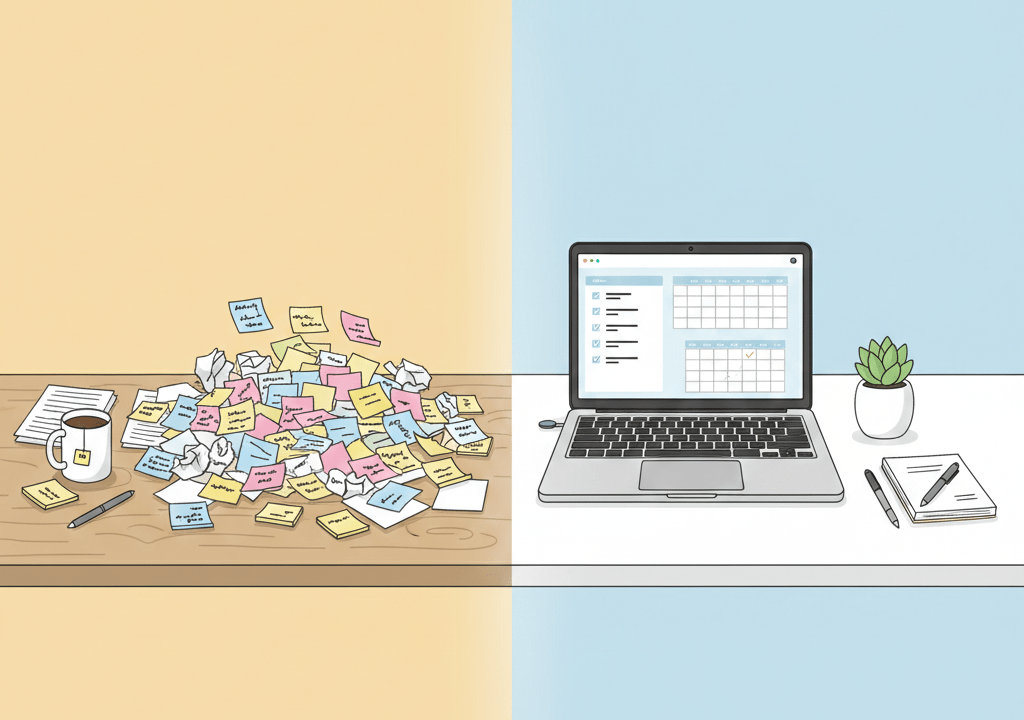
Property management is busy by nature—but chaos is optional. When reminders live on sticky notes, in random chats, and in your head, it’s easy to miss small tasks that later become big problems. Simple, repeatable systems help you capture everything once, see it in one place, and move through the day with less stress.
You don’t need a complicated setup; you just need a clear home for your tasks and a few habits you follow every day.
Why Sticky Notes Stop Working
Sticky notes and ad‑hoc reminders feel fast in the moment but fail when work gets busy.
- Notes fall off, get lost, or stay on a desk while you’re out on site.
- Nobody else can see what’s pending, so everything depends on one person’s memory.
- Important follow‑ups (like chasing an invoice or confirming a repair) quietly slip through the cracks.
That’s when you find yourself constantly “catching up” instead of feeling in control.
Choose One Simple Home for Tasks
The first step is to pick one main place where all tasks live.
- This could be a digital to‑do app, a task list in your property system, or even a shared spreadsheet—what matters is that it’s consistent.
- Every new task goes there: call‑backs, inspections, owner updates, approvals, chasers, renewals.
- If a task isn’t in the system, it effectively doesn’t exist.
Once your brain trusts that everything is captured, you spend less energy trying to remember and more energy actually doing.
Break Work into Clear, Actionable Items
Vague notes like “Follow up with Tenant A” or “Check Unit 304” are easy to delay or ignore.
- Turn them into clear actions: “Call Tenant A about late payment,” “Email owner of Unit 304 with repair quote,” “Schedule inspection for Unit 304 next Wednesday.”
- Add due dates where possible so you know what truly needs attention today.
- If a task takes less than two minutes, do it immediately instead of parking it.
Clear actions make it obvious what to do next, even on hectic days.
Use Light Structure: Daily, Weekly, Monthly
You don’t need complex workflows—just a simple rhythm.
- Daily: urgent repairs, tenant messages, today’s callbacks and inspections.
- Weekly: owner updates, chasing outstanding invoices, reviewing open tickets.
- Monthly/quarterly: lease renewals, rent reviews, portfolio‑level checks.
Grouping tasks this way prevents long‑term work from being buried under today’s emergencies.
Make It a Team Sport, Not a Solo Memory Game
Good systems help your team help each other.
- Use a shared task view so anyone can see what’s pending for a unit or building.
- Assign tasks by name, so everyone knows who owns what.
- When someone is off, another team member can step in because the work is in the system, not in someone’s notebook.
This reduces reliance on “heroes” and makes your operation more resilient.
Review and Reset at the End of the Day
A short end‑of‑day review keeps things under control.
- Check what was completed and what needs to roll to tomorrow.
- Close out tasks that are done but not yet marked as complete.
- Add any new follow‑ups that came up during the day so they’re not forgotten overnight.
It takes a few minutes but gives you a clearer head and a smoother start tomorrow.