


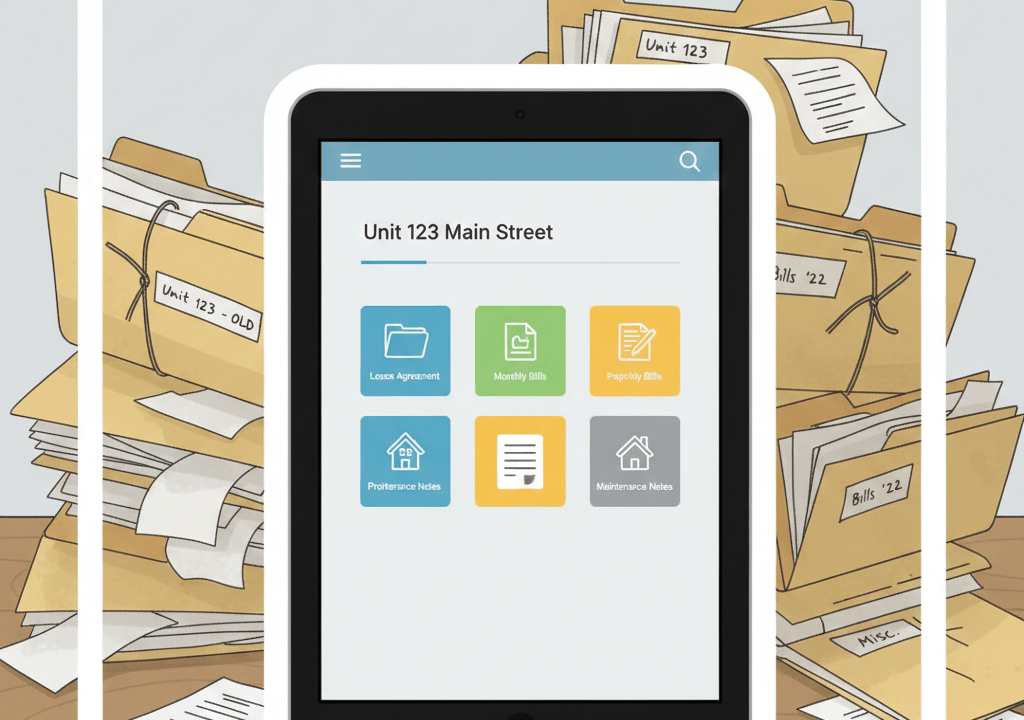
Daily property management is often harder than it needs to be because information is scattered. Leases live in shared folders, bills in email, inspection photos on someone’s phone, and notes in chat. Every time you need a full picture of a unit or tenant, you have to hunt across multiple places. Centralizing everything into one record per unit or tenant changes that. It turns “let me search for it” into “it’s all right here.”
Keeping leases, bills, photos, and notes together doesn’t just feel organized it makes decisions faster, reduces errors, and calms your team’s day.
The Cost of Scattered Information
When documents and records are spread out:
- Simple tasks take too long
Finding a lease clause, checking a payment, and looking at move‑in photos might mean three different systems. - Mistakes are more likely
People miss an email attachment, use an old version of a lease, or forget about a photo that proves a condition. - New staff struggle
They have to learn “where things usually are” instead of relying on a clear structure.
Over time, this adds up to slower responses, avoidable disputes, and more stress for everyone.

What “One Place for Everything” Looks Like in Practice
The ideal is simple: each unit or tenancy has a single digital home where you can see:
- Lease and addenda
- Payment history and current balance
- Bills and invoices related to that unit
- Inspection reports and photos
- Maintenance tickets and status
- Key notes or agreements
When someone opens that record, they see the story of the unit and the tenant from start to finish—without switching apps or searching folders.
Faster Answers, Fewer Disputes
With everything in one place:
- Tenant questions are easier to handle
“What does my lease say?” “What did I pay?” “What was recorded at move‑in?” can be answered in seconds. - Owner updates are clearer
You can quickly show income, costs, and key events for a specific unit or building. - Disputes are calmer
Instead of arguing from memory, you can point to the lease, the bill, and the photos in the same screen.
This builds trust because you can show your work.
Better Handover and Teamwork
Centralization also helps inside your team:
- When someone is off, others can step in because the history is visible.
- There’s less dependence on one person’s inbox or personal drive.
- Training becomes easier: “Always start from the unit record.”
The system, not individuals, becomes the main memory of the business.
Simple Steps to Move Toward One Place
You don’t have to migrate everything overnight. Start with:
- Choosing a primary system of record
Decide where the “official” unit/tenant record will live. - Standardizing what must be attached
At minimum: signed lease, key bills, inspection photos, and key tickets. - Changing your habits going forward
New leases, new photos, and new bills go into the right record first, then are shared by link if needed. - Gradually backfilling critical history
For high‑risk or active units, pull older documents into the central place over time.
Less Searching, More Managing
When leases, bills, photos, and notes are all in one place, you spend less time searching for information and more time using it. Daily management feels smoother, tenants and owners get clearer answers, and your team can finally rely on a single, complete picture for every unit