


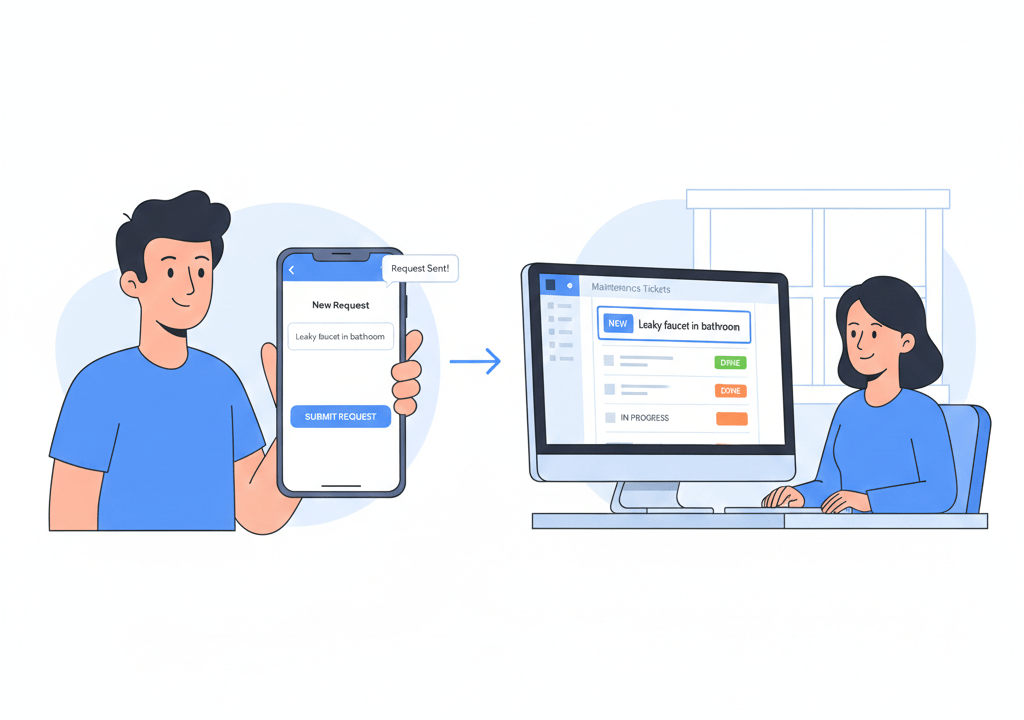
For a small building, taking maintenance requests by phone or WhatsApp can feel personal and efficient. As soon as your portfolio grows, that same approach turns into confusion: lost messages, unclear priorities, and tenants repeating the same story to different people. Logging maintenance requests in a proper system changes the experience for everyone—tenants, managers, and vendors.
A ticket is more than a record; it’s a shared source of truth about what’s wrong, who owns it, and where it stands.
The Problems with “Call Me If There’s an Issue”
Relying on calls and ad‑hoc messages creates predictable issues:
- Requests get buried in chat histories or forgotten after a busy day.
- Different team members promise different timelines without seeing each other’s notes.
- There’s no easy way to see how many open issues exist or which ones are urgent.
When tenants feel ignored or have to chase updates, trust erodes quickly—even if your team is working hard behind the scenes.

What Changes When You Use Maintenance Tickets
A maintenance system turns every request into a ticket with:
- A clear description, time stamp, and unit/tenant attached.
- An assigned owner (staff or vendor) responsible for follow‑up.
- A status that moves from “new” to “in progress” to “completed.”
Tenants know their issue has been logged properly. Managers can see all open and overdue items in one place. Vendors get clear instructions and history instead of fragmented messages.
Better Prioritization and Planning
With all requests logged:
- You can prioritize by severity (e.g., no water vs. cosmetic issues).
- Group similar tasks or nearby units to plan vendor visits efficiently.
- Spot patterns—like recurring problems in the same unit or building—that may signal a deeper issue.
This makes your response both faster and more cost-effective.
Clear Communication and Fewer Repeat Calls
Ticket systems usually send automatic updates when:
- A request is received.
- Work has been assigned.
- A visit is scheduled or completed.
Tenants no longer need to guess whether anyone saw their message. Your team spends less time answering “Did you get my request?” and more time actually resolving issues.
Tracking Performance Over Time
Because every ticket is recorded, you can measure:
- Average response and resolution times.
- Number of open vs. closed issues.
- Which properties or vendors perform well—or need attention.
These metrics help you improve service, negotiate better with vendors, and show owners concrete proof of operational quality.
Calm Operations, Happier People
Moving from phone calls and scattered messages to a simple ticket system doesn’t remove the human touch—it supports it. Tenants feel heard, staff feel organized, and vendors know exactly what to do. In the end, logging maintenance requests properly is less about software and more about creating a calmer, more reliable experience for everyone.