


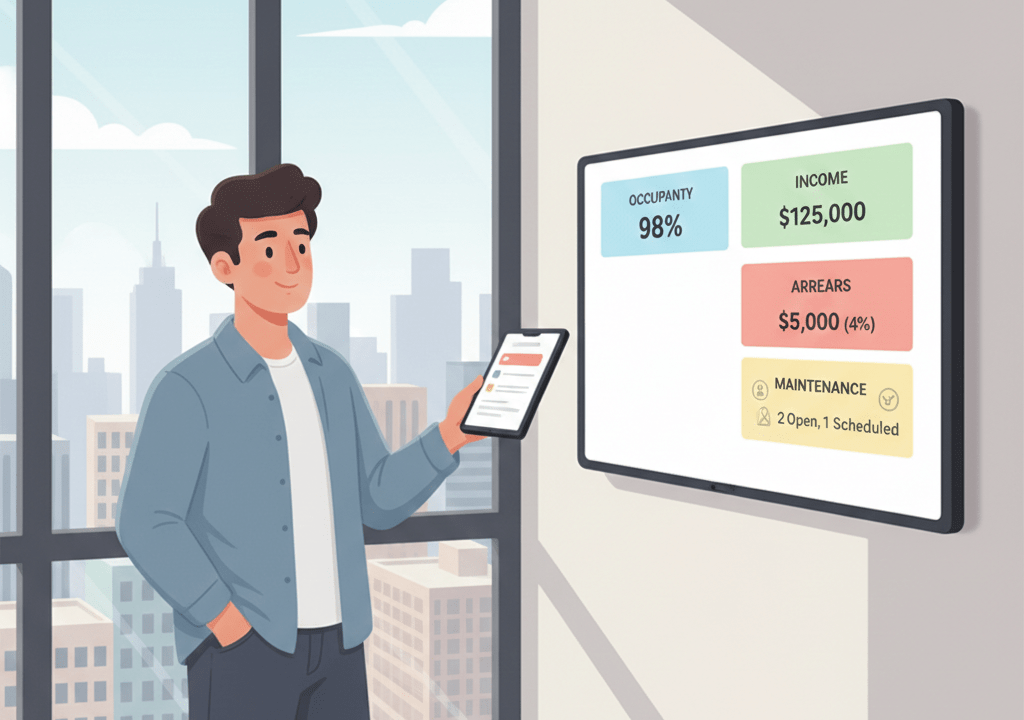
For many property owners, getting a clear picture of their portfolio means opening multiple reports, checking emails from managers, and comparing different spreadsheets. Each source tells part of the story—but rarely the whole thing. A single, well‑designed dashboard changes that by bringing the key signals into one place, in real time.
Instead of asking for updates, owners can simply log in and see what’s happening: income, occupancy, arrears, and issues across all assets in one view.
Why Owners Struggle to See the Full Picture
Even with good teams, owners often face the same problems:
- Different properties report in different formats and at different times.
- Important numbers (like arrears or vacancies) are spread across PDFs, emails, and files.
- Small problems only become visible when they’re already big like rising late payments or slow leasing.
This leads to delayed decisions and a constant feeling of “I’m not sure if I have the latest data.”
What a Single Dashboard Brings Together
A single portfolio dashboard pulls live data from daily operations and presents it in a way owners can scan in minutes. Typically it includes:
- Occupancy and vacancies
Current occupancy rate, units coming vacant soon, and pipeline status. - Income and arrears
Rent collected, outstanding amounts, and trends in late payments. - Expenses and cash flow
High‑level view of operating expenses, net cash, and upcoming obligations. - Operational signals
Open maintenance tickets, average resolution time, and any flagged issues.
Instead of digging through reports, owners get a “cockpit view” of the portfolio.
Benefits for Owners and Managers
A single dashboard helps both sides:
- Owners get transparency and can ask better, more focused questions.
- Managers spend less time preparing manual reports and more time improving operations.
- Patterns become obvious—such as a property that always lags in collections or a building with rising maintenance issues.
It turns conversations from “What’s going on?” to “What should we change?”

What Makes a Good Owner Dashboard
Not all dashboards are equal. A good one is:
- Simple – Only the most important metrics, clearly labeled.
- Live or frequently updated – No more waiting until month‑end to see problems.
- Drill‑down capable – Owners can click into a property or metric if they want more detail.
The goal is clarity, not complexity.
From Guesswork to Confidence
When information is scattered, owners operate on partial knowledge and delayed insight. A single, well‑designed dashboard replaces that guesswork with confidence: one place to see how the portfolio is performing today and where to focus next.