


In many real estate organizations, the portfolio is sophisticated but the cash-flow architecture is not. Rents, deposits, fees, and refunds flow through multiple bank accounts and gateways, each tied to different tools and teams. At month-end, finance is forced into a manual detective exercise—matching transactions, chasing missing references, and resolving discrepancies before reporting can be trusted. That delay is reconciliation lag, and it quietly reduces the speed and confidence of every strategic decision.
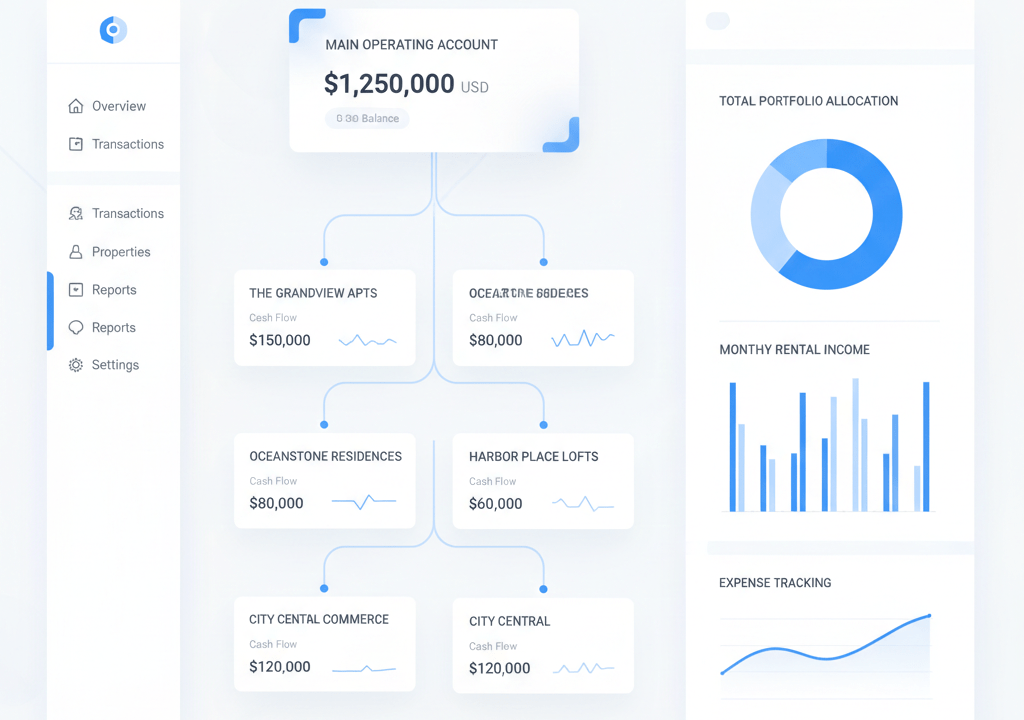
The single account advantage is a simple but powerful idea: route all core portfolio cash flows through one structured account architecture, then let software handle the allocation, tagging, and reporting. Instead of stitching together a financial story from scattered sources, you operate from a single, clean source of truth.
Why Multiple Accounts Create Hidden Risk
On paper, multiple accounts can look organized: one for each building, one for security deposits, one for foreign currency, one for owner distributions. In practice, this often leads to:
- Transactions landing in the wrong place and requiring manual reclassification.
- Inconsistent naming and referencing conventions across banks and systems.
- Delays in identifying late payments, duplicate charges, or missing funds.
Every extra account multiplies the number of reconciliations required and increases the chance that something will be missed or caught too late.
The Single Account Advantage Explained
Under a single-account or single-channel architecture, all incoming and outgoing payments pass through one controlled entry point typically one primary bank account or a tightly managed hub. From there, your platform applies rules:
- Automatically tagging transactions to properties, units, and tenants.
- Splitting amounts into rent, fees, taxes, and deposits.
- Updating ledgers and dashboards in real time.
Finance no longer spends days assembling basic truth. They review exceptions, not every line item. Asset managers see a live view of collections, arrears, and cash positions across the portfolio without waiting for manual consolidation.
How It Reduces Reconciliation Lag
Reconciliation lag happens when finance must wait for all accounts, statements, and exports to arrive before they can begin their work. A single account structure changes that rhythm:
- Fewer statements to pull, fewer sources to normalize.
- Clear, consistent transaction metadata from the beginning.
- Automated matching between bank lines and expected invoices or leases.
Closing cycles shrink from weeks to days. Stakeholders receive timely, accurate reporting, improving their ability to adjust strategy, plan distributions, and time investments.
A Practical Path to Standardizing Cash Flow
Moving toward a single account architecture does not require overnight disruption. A practical sequence is:
- Inventory current accounts and flows
Document every bank account, what flows through it, and which tools connect to it. - Define your primary cash channel
Choose the account that will become the central hub for rent, fees, and other recurring income. - Consolidate new flows first
Route new leases, new developments, or a selected region through the primary channel while legacy flows are progressively migrated. - Apply structured tagging and rules
Standardize references and automate allocation in your platform to keep the single account organized at scale. - Retire redundant accounts
Once reporting quality from the primary channel is proven, close or repurpose accounts that only create noise and extra work.
Turning Finance from Firefighting to Foresight
In a multi-asset portfolio, the difference between reactive and strategic finance often comes down to how money flows. A fragmented account structure forces teams into constant firefighting just to know where things stand. A single account architecture, supported by the right platform, turns that same team into a source of foresight—delivering clear, current insight on cash, risk, and performance.
When reconciliation lag disappears, your portfolio moves at the speed of your strategy, not the speed of your spreadsheets.