


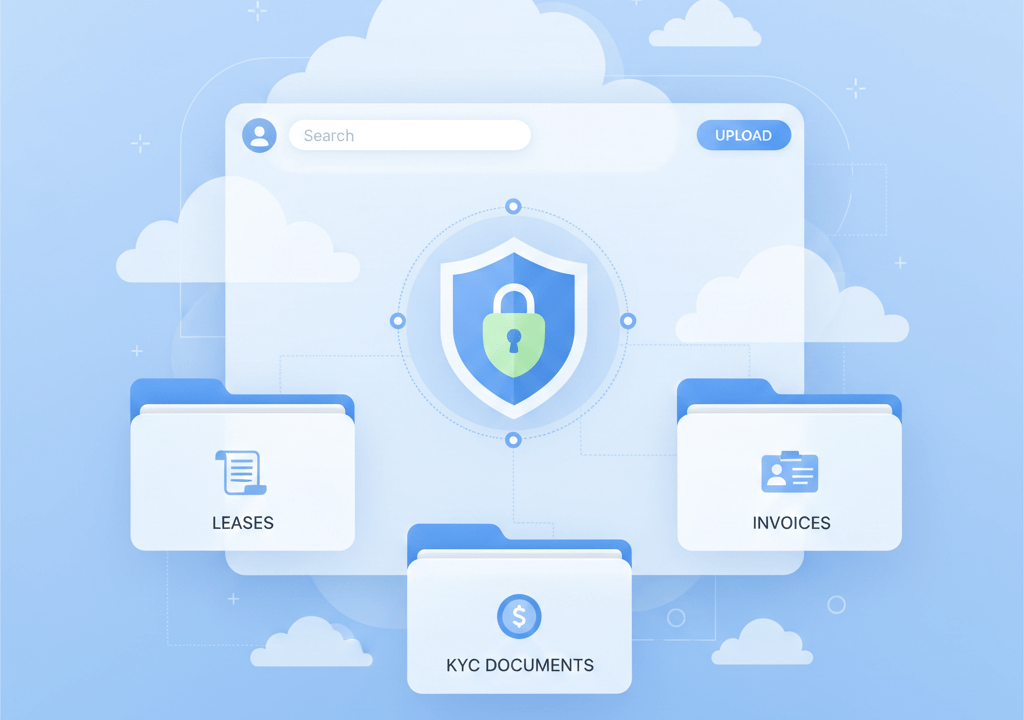
Lease files, KYC forms, invoices, board minutes, emails—property operations generate documents at every turn. When those records are scattered across email inboxes, personal drives, WhatsApp, and different systems, two things happen: audits become slow and stressful, and the risk of losing or exposing sensitive information goes up.
Centralized digital document storage fixes that by giving your team one secure place for all critical records, organized and searchable, with clear access controls. That makes audits faster and your portfolio safer.
The Problem with Scattered Documents
In many real estate businesses, documents live “wherever they landed”:
- Leases in shared folders, edits in email.
- KYC and ID documents on individual devices.
- Vendor contracts and invoices split between finance and operations.
When an auditor, regulator, or investor asks for proof, the team scrambles to piece together a complete picture. This wastes time and increases the chance something important is missed.
What Centralized Document Storage Changes
A centralized system brings all key records into one structured repository:
- Each property, unit, tenant, and vendor has its own document space.
- Version history tracks who changed what and when.
- Search and filters make it easy to find exactly what you need in seconds.
Instead of chasing files across multiple channels, your team opens one secure workspace and pulls everything from there.
Faster, Cleaner Audits
When documents are centralized and tagged correctly, audits become much simpler:
- Requests like “show all leases for this building” or “show KYC for these tenants” can be answered quickly.
- Audit trails (approvals, signatures, date stamps) are easy to prove.
- Finance and compliance teams spend their time explaining the business, not hunting files.
This reduces disruption to day‑to‑day operations and creates a more professional impression for investors and regulators.
Better Security and Access Control
Security is not just about strong passwords; it’s about knowing who can see what:
- Role-based access means staff only see documents relevant to their job.
- Sensitive files (like IDs, bank details, and contracts) have stricter permissions.
- If someone leaves the company, their access can be removed in one place.
This is far safer than documents sitting in personal email accounts or unprotected folders.
Simple Steps to Get Started
You don’t have to move everything overnight. Focus on:
- Defining your document categories
Leases, KYC, invoices, board minutes, vendor contracts, inspection reports, etc. - Choosing a single secure repository
Commit that this is where official documents live going forward. - Standardizing naming and tagging
Use consistent patterns for properties, units, tenants, and document types. - Migrating critical records first
Start with active leases and high‑risk documents, then work backward as needed.
From Chaos to Confidence
Centralized digital records turn document management from a constant scramble into a quiet strength. Audits become faster and less disruptive, sensitive information is better protected, and your team can finally trust that the “official version” of every critical document is easy to find—and properly secured.