


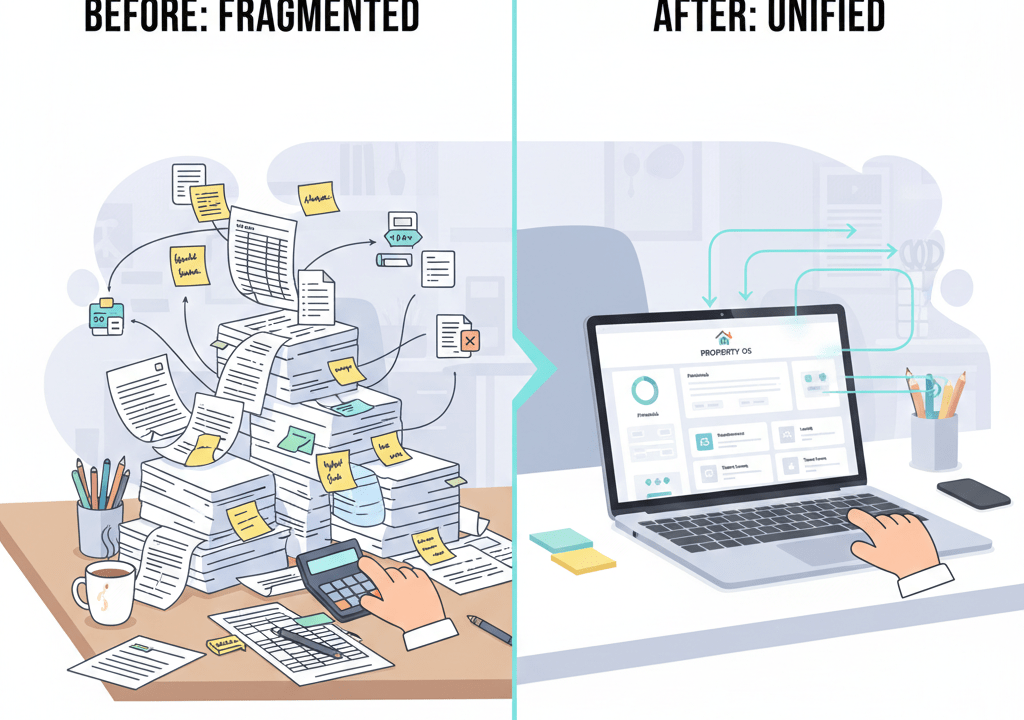
Spreadsheets are a great starting point for small property portfolios. They’re flexible, familiar, and quick to set up. But as soon as you add more buildings, more owners, and more team members, those same sheets become fragile, slow, and risky.
An integrated ERP (Enterprise Resource Planning) system replaces scattered files and disconnected apps with one shared platform for leases, payments, expenses, and reports. Instead of each person maintaining their own version of the truth, your entire business works from a single, up‑to‑date view of the portfolio.
Where Spreadsheets Start to Fail
At the beginning, a few tabs for rent rolls, expenses, and contacts feel manageable. As you grow, cracks appear:
- Different people download copies and update them separately.
- Formulas break when someone inserts a column or changes structure.
- Tracking who paid, who’s late, and what’s outstanding becomes a manual chase.
The larger your portfolio, the more time you spend fixing spreadsheets instead of managing properties.
What an Integrated ERP Does Better
An integrated ERP brings your core workflows into one system:
- Tenant and lease details are stored once and reused for billing, reminders, and reports.
- Rent invoices, receipts, and overdue notices are generated and tracked automatically.
- Vendor bills and expenses are logged against the right property and unit.
- Dashboards show occupancy, cash flow, and arrears in real time.
This reduces duplication and makes sure everyone is looking at the same numbers.
Day-to-Day Benefits for Your Team
Moving from spreadsheets to an ERP changes the way your team works:
- Less manual data entry and fewer errors.
- Faster answers to basic questions like “Who still owes this month?” or “What is our current occupancy rate?”
- Easier handovers when people change roles, because processes live in the system, not in personal files.
That frees managers to spend more time on strategy and less on data clean‑up.
How to Know You’re Ready
You’re likely ready for an integrated ERP if:
- You’re managing multiple buildings, HOAs, or projects.
- You depend heavily on one or two “spreadsheet experts” to keep everything running.
- Month‑end and year‑end reporting feels stressful, slow, and manual.
At that point, the risk and effort of staying on spreadsheets usually outweigh the cost and learning curve of moving to a proper system.