


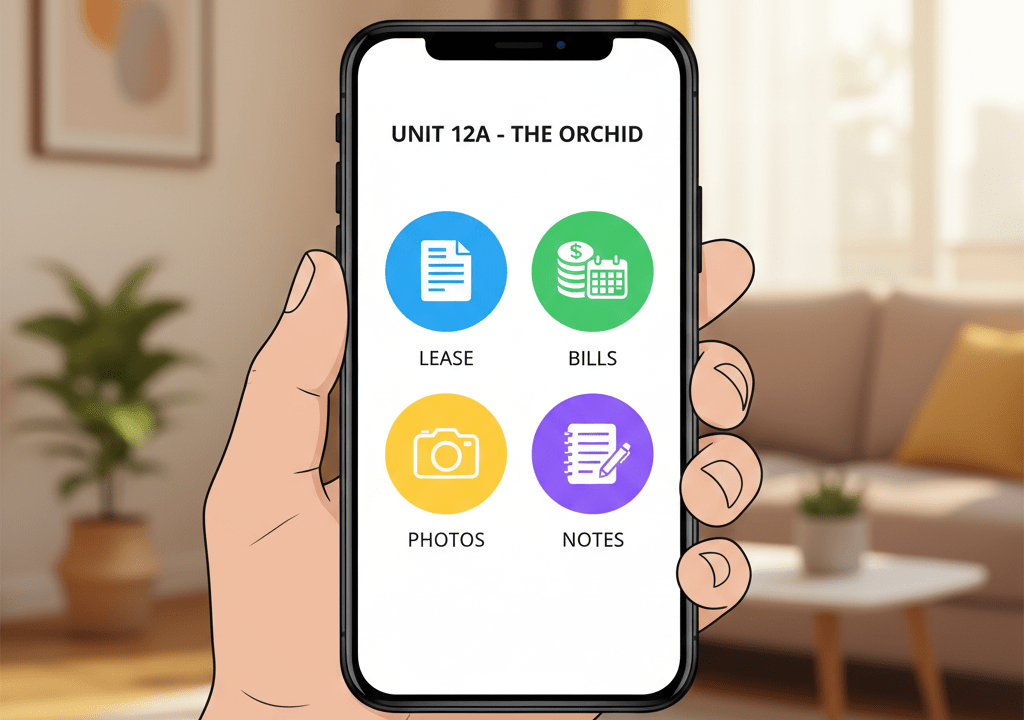
When you’re busy, the hardest part of property management often isn’t the work itself—it’s finding the information you need. The lease is in one folder, the bills are in someone’s email, and the inspection photos are lost in a phone gallery. Storing everything together in one place for each unit or tenant turns that daily chase into a single tap or click, making life easier for your future self (and your team).
Instead of asking “Where is it?”, you can focus on “What should we do next?”
The Hidden Cost of Scattered Information
When information lives in different places, every small task takes longer than it should.
- Answering a simple tenant question might mean opening email, digging in shared drives, and scrolling through chat.
- Owners wait while you “just find that invoice” or “check the photos from last year.”
- New team members rely on colleagues instead of a clear, central record.
None of this is complicated work—but it drains time, creates stress, and increases the risk of mistakes.
What “All in One Place” Really Means
Centralizing information doesn’t have to be fancy. It simply means that for each unit or tenancy, there is one main record where you can see:
- The signed lease and any addenda
- Payment history and current balance
- Bills and invoices linked to that property
- Inspection notes and photos
- Maintenance tickets and status
- Key agreements or special conditions
When you open that record, you see the story of that unit from start to finish without jumping between tools.
Faster Answers for Tenants and Owners
Having everything stored together changes how quickly and confidently you can respond.
- Tenants ask, “What does my lease say about pets?” or “What did I pay last month?”—you answer in seconds.
- Owners want to know, “Why was there extra work this quarter?”—you can show invoices, photos, and notes in one view.
- Disputes about damage or charges become calmer because you can show the lease, the history, and the photos together.
You come across as organized and transparent, which builds trust on both sides.

Making Life Easier for Your Future Self
A lot of organization work doesn’t pay off today—it pays off in six months, when something goes wrong and you need proof.
- When a tenant moves out, you don’t have to search old messages for move‑in photos.
- When a long‑term owner questions costs, you have years of records in one place.
- When a colleague is sick or leaves, you don’t lose the history—they were adding to the same system all along.
Your future self will be grateful you took a few extra seconds to store things properly now.
Simple Habits to Get There
You don’t need a huge project to start. Small, consistent habits make the difference.
- Pick one “home” for each unit or tenant (your main system, not a personal folder).
- Save new leases, photos, and key bills there first, then share links if needed.
- Use clear names and dates so anyone can understand the record at a glance.
- When you touch an older unit, take an extra minute to pull any missing key documents into its record.
Step by step, your portfolio becomes easier to manage, because the information is finally where you expect it to be.