


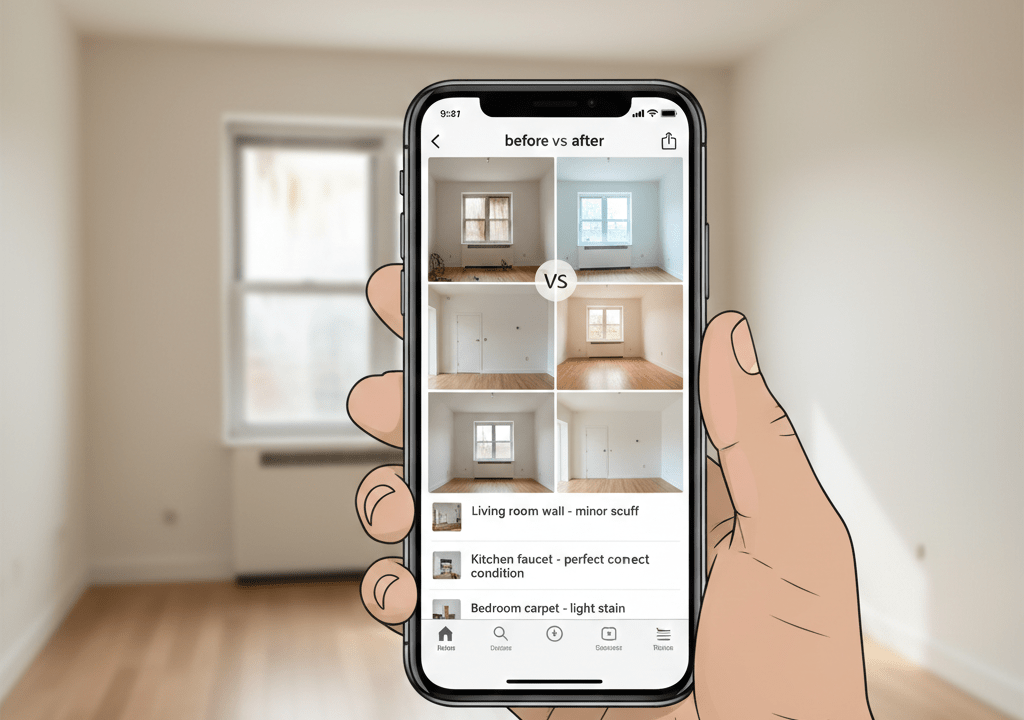
Disagreements about damage, cleaning, or “how the unit used to look” are some of the most stressful moments in property management. In many cases, nobody is lying—people just remember things differently. Detailed inspection records, with clear photos and notes, turn those emotional debates into factual conversations.
Good records don’t just protect you legally; they also help fair tenants and fair owners feel that decisions are transparent and justified.
Why “We Remember It Differently” Is a Problem
When move‑in and move‑out records are weak:
- Tenants feel unfairly charged for damage they believe was already there.
- Owners worry managers are “too soft” or not thorough enough.
- Property teams end up negotiating from memory instead of evidence.
This erodes trust on both sides and makes every deposit decision a headache.

What “Good” Inspection Records Look Like
Strong inspection records usually include three elements:
- Photos
Wide shots and close‑ups of each room, key surfaces, appliances, bathrooms, and any existing damage. Timestamps and, ideally, unit IDs are visible in the file metadata. - Structured notes
A checklist for each area (walls, floors, windows, fixtures, appliances) with simple ratings like “good,” “worn,” or “damaged,” plus short comments where needed. - Clear linkage
All photos and notes are tied to a specific unit, date, and inspection type (move‑in, routine, move‑out) and stored in one place.
That way, anyone can go back and see exactly what the inspector saw on that day.
How This Prevents Arguments
When you have solid records, difficult conversations change tone:
- Instead of “It wasn’t like that when I moved in,” you can show the move‑in photos and checklist.
- Instead of an owner saying “You’re not charging enough,” you can show the real condition trend over the tenancy.
- Instead of debating wear and tear in the abstract, you compare before/after images and notes.
People are more likely to accept outcomes—even if they’re not happy—when they can see the basis for the decision.
Practical Tips for Better Inspections
You don’t need special hardware; a smartphone and a consistent method are enough:
- Take photos in the same order each time (e.g., entry → living → kitchen → bedrooms → bathrooms → balcony).
- Capture meter readings and serial numbers for key equipment when relevant.
- Always photograph existing damage at move‑in and label it clearly in notes.
- Do a quick final review before leaving the unit to ensure no room was skipped.
Most importantly, store everything in a central system, not in personal galleries or scattered folders.
Proof Protects Everyone
Better inspection records are not about “catching” tenants or defending owners at all costs—they’re about fairness. When photos, notes, and proof are properly captured and easy to access, you protect your company, your owners, and your honest tenants from unnecessary conflict. The process becomes less emotional, more factual, and far easier to manage at scale.