


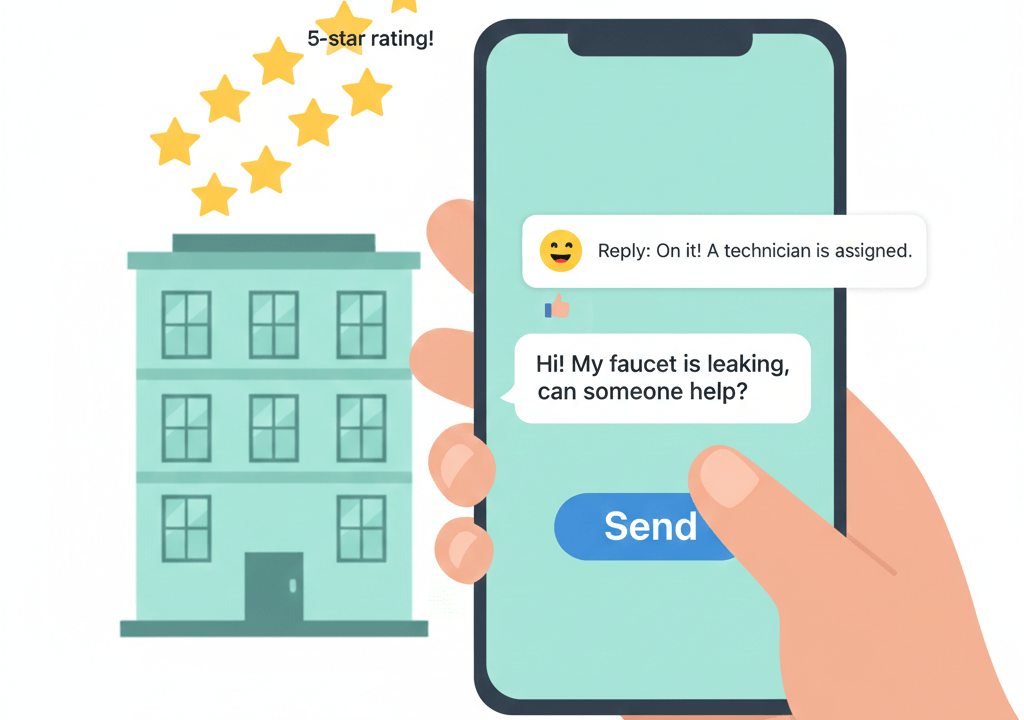
In property management, many issues are unavoidable—a lift will break, a tap will leak, a neighbor will be noisy. What tenants remember most, though, is not perfection; it’s how fast and how clearly you respond. Response time is one of the simplest, most powerful signals of professionalism, and it directly influences reviews, referrals, and renewal decisions.
Quick replies show tenants that someone is listening. Slow or no replies send the opposite message, even if you eventually fix the issue.
Speed = Respect in a Tenant’s Mind
When tenants reach out, they’re often dealing with stress: an urgent repair, confusion about a bill, or uncertainty about building rules. A fast acknowledgement—even before the problem is fully solved—does three important things:
- Confirms their message was received and won’t be ignored.
- Reduces anxiety because they know what will happen next.
- Builds trust that management is present and paying attention.
Tenants who feel heard are far more forgiving when actual fixes take time.

How Response Time Shapes Reviews and Ratings
Most public reviews mention two things: how issues were handled and how quickly someone responded. Even a negative event can turn into a positive review if:
- The tenant got a prompt reply.
- The team explained the plan and set clear expectations.
- Updates were shared without the tenant needing to chase.
On the other hand, silence or slow responses often turn small problems into angry posts, low ratings, and reputational damage that hurts leasing.
Fast Replies Support Renewals and Lower Vacancy
When lease renewal time comes, tenants think about their overall experience. Questions in their mind include:
- “When I had a problem, did they respond quickly?”
- “Did I need to follow up multiple times to get answers?”
If the answer is “they’re responsive,” tenants are much more likely to stay—sometimes even at a slightly higher rent—because they trust the management relationship. That stability reduces vacancy, leasing costs, and pressure on your team.
Practical Ways to Improve Response Time
You don’t need a big system to get better at this. Simple steps include:
- Set a clear internal response standard
For example: acknowledge all tenant messages within a few business hours, even if you can’t solve the issue immediately. - Use templates for common replies
Pre‑written responses for maintenance requests, billing questions, and general inquiries save time and keep tone consistent. - Centralize incoming messages
Try to funnel requests into one place (portal, app, or dedicated email) so nothing gets lost across scattered channels. - Track missed or late responses
Regularly review where response times slipped and why—then adjust staffing, processes, or tools.
Small Change, Big Perception Shift
Improving response time doesn’t require huge budgets, but it significantly changes how tenants feel about your properties. Fast, clear replies turn everyday issues into opportunities to demonstrate care and professionalism—and over time, that shows up directly in better reviews, stronger word‑of‑mouth, and higher renewal rates.